SPVs — special purpose vehicles — are becoming increasingly popular in venture and tech investing. Their promise is simple: they give investors access to private companies they might not otherwise be able to invest in directly.
That sounds attractive, especially when the company is a hyped pre-IPO candidate. Think SpaceX, Anthropic, Stripe, or in Europe, fast-growing AI startups such as Legora, ElevenLabs, and Lovable. The pitch is often emotional: get in before the IPO, before everyone else can.
But that is also where the risk begins.
A recent Sifted report about Swedish legal AI startup Legora showed how complicated these structures can become. Shares linked to Legora reportedly appeared on a secondary trading platform, while the company said it had not approved those transactions.
For investors, the key question is simple: what am I actually buying?
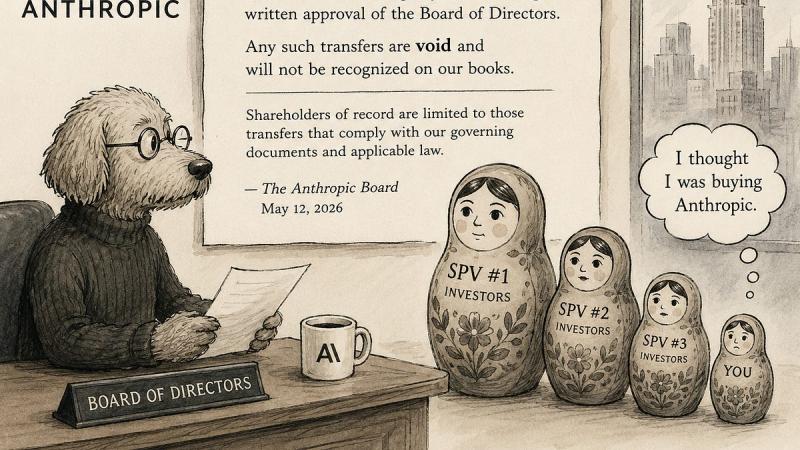
In an SPV, you may not own shares in the company directly. You may own a stake in a vehicle that owns shares, or even exposure to another structure that sits between you and the company. That means your rights, fees, liquidity, and legal position can be very different from what the headline suggests.
The biggest risks are usually threefold.
First, valuation. A great company is not automatically a great investment, especially if the price already assumes a perfect IPO story.
Second, liquidity. A secondary market does not mean you can sell whenever you want. Private company shares often come with transfer restrictions and limited buyer demand.
Third, structure. Fees, carry, voting rights, information rights, dilution protection, and exit mechanics all matter. If several vehicles sit between you and the actual shares, a lot can get lost along the way.
SPVs are not necessarily bad. A well-structured SPV with a trustworthy sponsor, clear rights, fair fees, and company-approved transfers can be a useful tool. But they are not a cheat code for investing in the next big tech winner.
For most investors, a simple rule applies: if you cannot explain in two minutes what you own, what rights you have, how you can exit, and what happens if something goes wrong, you should not invest.
The real question is not whether the startup sounds exciting. It is: what exactly am I buying, at what price, through whose structure, and how do I get my money back?


Kommentar verfassen