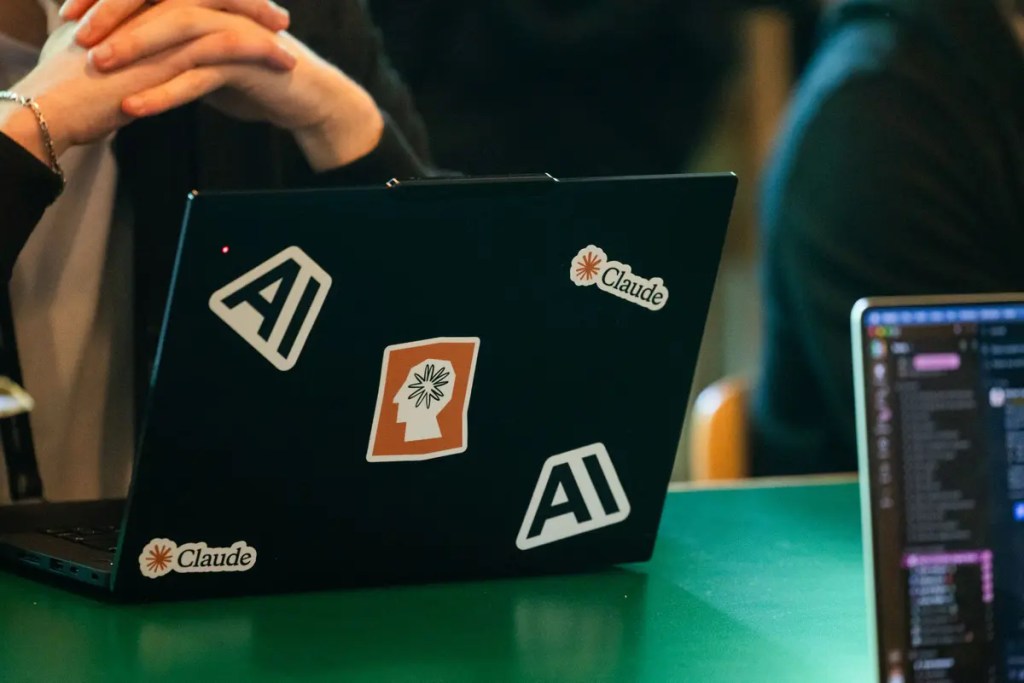
The NZZ recently highlighted an unusual Swiss AI story: a Basel-based association called Macroscopic Ventures is reportedly among the early investors in Anthropic, the company behind Claude. What makes the story remarkable is not only the potential financial return, but also the background and motivation of the investor.
Macroscopic Ventures reportedly invested in Anthropic as early as 2021 and 2022. Today, Anthropic is one of the world’s most valuable private AI companies and is being discussed as a potential IPO candidate, with valuation scenarios approaching the trillion-dollar range. If early investors entered at Series A terms, their investment could theoretically have increased by a multiple well above 100x and possibly above 200x.
In venture capital, such numbers are extremely rare. A 10x multiple on a single investment is already considered very strong. At the fund level, returning 3x or 5x is an outstanding result. Individual investments can, of course, perform far better, but Anthropic belongs to the category of true outliers. These outcomes happen only when an investor enters very early into a company that later becomes one of the defining technology businesses of its generation.
At the same time, any interpretation of these figures requires caution. From the outside, we do not know exactly how much Macroscopic Ventures invested, at what terms, how much the stake was diluted in later financing rounds, or whether the full position is still being held today. The precise return cannot be calculated reliably. But the direction is clear: for early investors, Anthropic was an exceptional home run — and likely one of the most spectacular AI investment cases to date.
More Than a Silicon Valley Success Story
What makes the case especially interesting is not just the financial dimension. If a major Silicon Valley VC had been an early investor in Anthropic, the result would be impressive, but not entirely surprising. With Macroscopic Ventures, the story is different. The organization comes from the effective altruism ecosystem and has been strongly focused on AI risk, safety, and alignment.
That suggests the investment was probably not only financially motivated. It was likely also strategic or mission-driven. Anthropic positioned itself early as an AI company that placed more emphasis on safety, governance, and alignment than many other players in the market. For investors from the AI safety community, backing Anthropic early may therefore have meant supporting a company they believed was pursuing a more responsible path in artificial intelligence.
This is where the story becomes truly relevant. If such an investment produces a potential billion-dollar return, the entire context changes. A relatively small organization from Basel could suddenly have significant financial resources to support research, non-profits, or projects in AI safety. That would be notable for the European — and especially Swiss — AI ecosystem.
At the same time, it creates a tension. Anyone warning about the risks of artificial intelligence while also benefiting financially from one of the leading AI companies must be especially transparent about how mission, financial interest, and governance fit together. In the AI world, this question is becoming increasingly important: Who funds whom? Who gets a seat at the table? And what incentives shape the next phase of technological development?
Venture Capital as a Lever of Influence
The case of Anthropic and Macroscopic Ventures is therefore more than a Swiss success story. It shows how closely capital, safety thinking, and societal influence are intertwined in the AI industry. In this context, venture capital is not merely a financing tool. It is also a lever for strategic positioning.
Looking back, an investment in Anthropic may now seem obvious. But that is one of the most common illusions in venture capital. At the time of early financing rounds, investors are not backing a proven business model, clear market leadership, or often even meaningful revenues. They are investing in teams, markets, technological trajectories, and a thesis about the future.
The conviction that appears self-evident today was anything but obvious at the time. That is precisely what makes venture capital fascinating: you invest early, under conditions of high uncertainty, and sometimes that uncertainty turns into an extraordinary home run.
In Anthropic’s case, the home run is not only a financial story. It is also an example of how the power centers of AI development are shifting. Alongside large technology companies and traditional venture funds, new actors are emerging who combine capital, mission, and broader societal objectives.
That is what makes the story of Macroscopic Ventures so compelling. It stands as an example of a new phase in the AI economy: the question is no longer only which companies will win. The question is also which investors, institutions, and networks will gain influence through those companies.


Kommentar verfassen