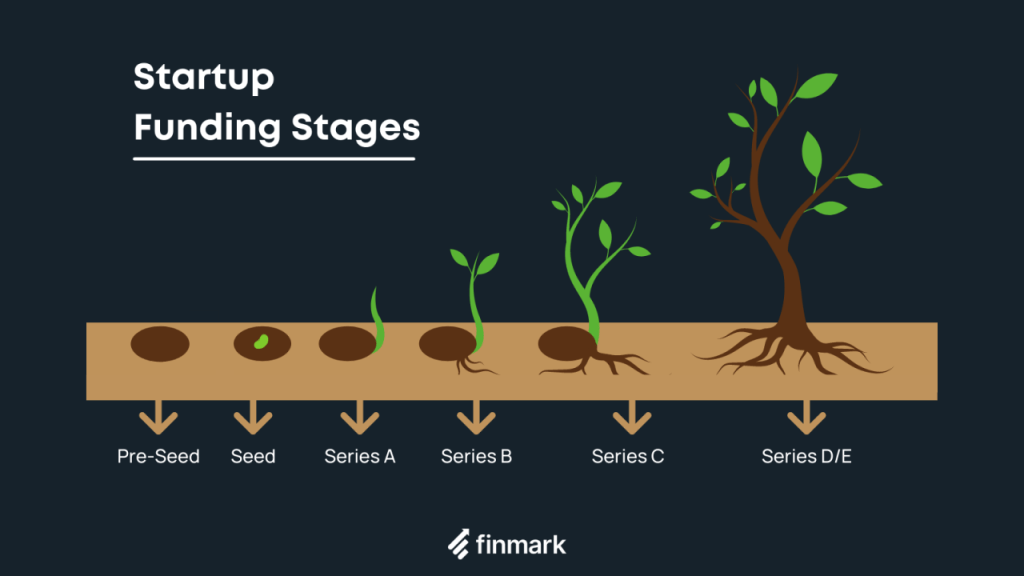
This week on the Burn Rate podcast, we discussed a shift that is becoming impossible to ignore: the seed market is not dead, but it is changing dramatically.
We looked at the latest numbers from the U.S. venture market, because the U.S. is often a leading indicator for what may later show up in Europe. According to Crunchbase, U.S. seed funding has not collapsed. But underneath the headline numbers, the market is becoming much more divided.
Smaller pre-seed and seed rounds between $200,000 and under $5 million were down roughly 20% year over year in both deal count and funding amount. At the same time, larger seed rounds are growing.
The most striking number: in 2025, more than half of all U.S. seed capital went into rounds of $10 million or more. Just a few years ago, seed was much more defined by smaller tickets. Today, the market is splitting into two very different realities.
On one side, there are startups with exceptional AI teams, fast early traction, famous founders, or a very strong narrative. These companies can raise enormous seed rounds. On the other side, there is everyone else.
For the majority of founders, fundraising has become harder, not easier. A good product is no longer enough. A strong MVP is no longer enough. In a world where AI tools make it easier than ever to build software, investors are asking a different question: can this become a real business?
Is seed still seed?
This raises a bigger question: is seed still really seed?
For many large AI rounds, the answer is: not in the traditional sense.
Classic seed funding used to be about building the first product, testing a market, finding early customers, and proving that something real might exist. But when a company raises $10 million, $20 million or even $50 million at seed stage, that is no longer just about building version one.
That capital is often used for speed: hiring talent, buying compute, acquiring data, building infrastructure, and trying to occupy a market before competitors can catch up. In other words, some of today’s seed rounds look less like traditional seed and more like a disguised Series A.
The important question is what this means for founders who are not ex-OpenAI, ex-DeepMind, Stanford-famous, or already backed by elite networks. For those founders, the bar is rising. They need to show much more why they can win. That means: a very sharp customer focus, strong distribution, real willingness to pay, and unfair access to a specific market.
A good AI product alone is not enough anymore. Because if many teams can build something similar quickly, the real differentiation moves elsewhere.
Crunchbase data shows that seed funding has not stalled. But it has become more competitive, more concentrated, and more extreme.
Smaller rounds still make up the majority of seed deals, but their share has fallen over time. In 2018, rounds of $5 million or less represented 93% of U.S. seed deal counts. By 2025, that share had dropped to 75%. Meanwhile, seed rounds of $10 million or more grew from 2% to 9% of deals over the same period.
So the market is not disappearing. It is bifurcating. For a small number of companies, seed has become bigger than ever. For everyone else, seed has become more selective than ever.
The takeaway
For founders, the lesson is not to chase huge seed rounds. The lesson is to understand what investors are really underwriting.
The winners will not simply be the teams that launch fastest. They will be the teams that combine product speed with customer depth, distribution, market insight, and commercial discipline. Seed is still seed, but only for some companies. For others, it has already become the first battlefield of scale.


Kommentar verfassen